
Balls and Ropes: Cut 'n Bounce
MOONEE PUBLISHING LTDArcade
4.3581.00 Reviews
- Version
- 1.0.39
- Installs
- 10.00M
- Age Rating
- Everyone
Screenshots



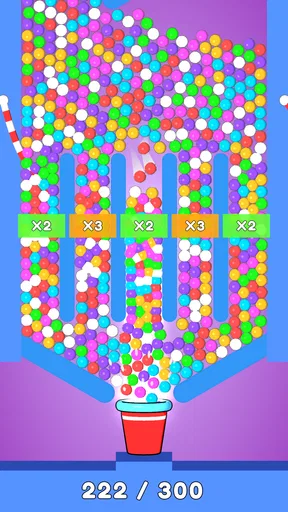
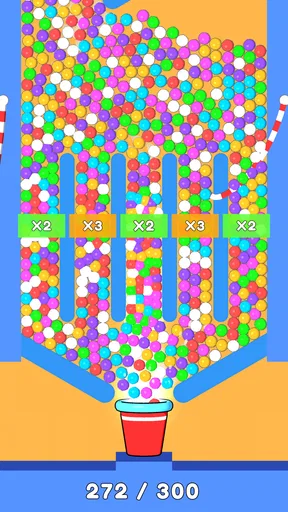

Our Review of Balls and Ropes: Cut 'n Bounce
 Analysis by Appyee
I went into Balls and Ropes: Cut 'n Bounce expecting a quick arcade diversion, and that is exactly where it makes its strongest first impression. The idea is easy to understand: cut ropes, guide bouncing balls, and collect what is placed in their path. There is no long tutorial to study and no complicated control scheme to learn. Within a short session, I was already making small adjustments to my cuts and trying to improve the result.
That simplicity is both the game’s main attraction and the question hanging over it. A casual game can be excellent for a few spare minutes without becoming something I return to every day. My experience with this one was shaped less by its basic premise—which is immediately appealing—and more by how much variety and motivation remained after the first wave of curiosity passed. It is a free arcade game from MOONEE PUBLISHING LTD, rated for Everyone, and its broad accessibility makes it easy to recommend as a low-pressure option. Whether it earns a permanent place on your phone depends on what you want from a mobile game.
Why the first week feels so inviting
The opening appeal comes from the physical logic of the play. A rope is in the way, the ball is moving or waiting to move, and I need to decide where to cut so the result goes in my favor. That creates a pleasant combination of timing and prediction. The action looks simple, but a careless cut can send the ball away from the useful path, while a better-timed decision can collect more of what is available.
I like that the game does not demand a large uninterrupted block of time. It fits naturally into the moments when I am waiting for transport, taking a short break, or winding down before bed. A single attempt is easy to start, and the visual idea is clear enough that I do not need to remember a complicated control layout after leaving the game for several hours.
The early sessions also benefit from a useful mental rhythm. First I look at the arrangement, then I imagine the ball’s movement, and finally I commit to a cut. That small pause before acting gives the game more personality than a purely reflex-based arcade title. It is not a deep physics simulator, but it does encourage me to observe rather than tap randomly.
One practical tip is to resist cutting immediately just because a rope is available. I found that the first visible opportunity is not always the best one. Taking a moment to follow the likely bounce can help reveal which cut will collect more balls or avoid sending the main path somewhere unhelpful. This is a small habit, but it makes the game feel more deliberate and reduces the frustration of failed attempts.
The game is also approachable for players who do not usually enjoy demanding arcade challenges. The Everyone age rating reflects that broad presentation, and the basic objective can be explained in a sentence. I could hand the phone to someone unfamiliar with mobile games and expect them to understand the central interaction quickly. That makes it suitable for casual family play, although the appeal may still vary depending on how much repetition each person tolerates.
Its reception suggests that many players find the formula immediately enjoyable: the game holds an average rating of 4.3 from around 13 thousand ratings and has passed 10 million installs. Those figures do not guarantee that it will suit every player, but they do fit my impression that the concept is easy to pick up and broadly approachable.
The small decisions matter more than the premise suggests
What kept my first sessions interesting was not simply collecting balls. It was learning to treat each arrangement as a short planning problem. I began paying attention to the order of cuts instead of viewing them as isolated taps. If one rope influences the ball’s direction, cutting another rope too soon can remove the chance to use that movement effectively.
This is where the game has more substance than its short description might suggest. The action remains light, but the best results often come from controlling impatience. I found myself experimenting with whether to make a safe cut first or attempt a more ambitious sequence. That gives the early experience a modest skill curve without turning it into a punishing precision game.
Another useful approach is to separate collection from completion in my mind. A successful finish may not be the same as the most satisfying finish. When I focused only on getting through an arrangement, I sometimes overlooked a better route. When I looked for a cleaner sequence, I paid more attention to the ball’s bounce and the consequences of each rope removal. Players who enjoy optimizing small actions will probably get more from it than those who want constant novelty.
What remains after the novelty fades
After the first week, the important issue becomes recurring value. The central mechanic is pleasant, but it is also narrow. Once I understood the basic relationship between ropes, bounces, and collection, the game had to rely on fresh arrangements and my own desire to improve. That can be enough for short daily sessions, but it is not the same kind of long-term pull offered by a larger arcade game with several distinct modes or a strong progression system.
I see the most durable use case as a compact break rather than a primary game. It works when I want something that starts quickly and does not require me to reconnect with a story, manage a large inventory, or remember complicated objectives. In that role, it remains useful month after month because the barrier to returning is so low. I can open it, solve a few situations, and leave without feeling that I have abandoned a larger commitment.
For a player who needs a game to provide a new challenge every evening, the long-term picture is less convincing. The rope-cutting idea can support many individual puzzles, but the interaction itself stays familiar. That means the game’s lasting value depends heavily on whether you enjoy refining your decisions inside one recognizable format.
Compared with endless runners, this is less about maintaining a continuous reflex flow and more about making a choice before the next movement matters. Compared with match-three games, it does not ask me to build combinations across a large board. Compared with physics puzzle games, it presents a lighter version of cause and effect, with quicker attempts and less room for elaborate experimentation. I would choose it when I want a focused micro-puzzle, not when I want a broad arcade collection in one app.
A realistic routine would be opening it during a coffee break, playing until I have solved a handful of arrangements, and closing it before the session becomes repetitive. That pattern suits the design better than treating it as a game that must occupy an entire evening. In my experience, stopping while the decisions still feel fresh helps preserve its appeal for the next visit.
Who gets the most value from repeated sessions?
The best match is someone who enjoys simple rules with small tactical choices. If you like watching a plan unfold and correcting your timing, the game offers a satisfying loop. It is also a good fit for people who want an arcade title that can be understood instantly and played in short bursts.
It is less suitable for players who need a strong narrative, character development, competitive depth, or a large range of gameplay styles. I would also hesitate to recommend it as the only game on a long trip unless the player already enjoys repetition. Its strength is convenience and clarity, not a huge amount of content variety.
The free entry point makes trying it straightforward, while optional in-app purchases range from $4.99 to $7.99 per item. That is worth keeping in mind if you are trying to maintain a completely cost-free mobile routine. I did not view the purchase option as the reason to play, and the game makes more sense when judged by its basic arcade loop rather than by the possibility of spending money to extend the experience.
Maintenance, friction, and the reasons fatigue can appear
One advantage of the game is that it asks very little maintenance from the player. I do not need to build a long-term strategy outside the individual situations, and returning after a break feels easy. There is no large system to relearn. That makes it a convenient standby game for a phone, especially when I want entertainment without setup.
That same lightness can become a limitation. Because there is not much preparation or personal investment, there is also less emotional reason to return. A game with a collection system, social competition, or a more developed progression loop can create stronger habits. Here, the habit has to come from enjoying the act of cutting and bouncing itself.
The first source of fatigue is repetition in the core interaction. Even when arrangements change, I am still looking at ropes, anticipating a bounce, and trying to collect the available balls. If that sequence is satisfying to me, repetition feels calming. If I want constant mechanical surprises, it starts to feel predictable.
The second source is the difference between a clever failure and an unclear failure. When I understood why a cut went wrong, retrying felt worthwhile. When the outcome felt less obvious, the same simplicity that makes the game accessible could make it feel shallow. My advice is to pay attention to whether you enjoy analyzing the result. If you prefer immediate, unmistakable feedback from every action, another arcade style may suit you better.
A third issue is session length. The game is strongest in short visits, but that also means it may not support extended play as comfortably as a more varied alternative. I would not use it as my main evening entertainment unless I was specifically in the mood for a repetitive, focused puzzle loop. This is not a flaw for its intended casual role, but it is an important trade-off when deciding whether to keep it installed.
How to keep the experience fresh without forcing it
I found that changing my goal helped more than simply playing longer. One session could focus on finishing efficiently, while another could focus on finding a cleaner collection route. Treating the game as a brief exercise in planning rather than a race to consume content made the familiar mechanic feel more purposeful.
It also helps to stop after a few unsuccessful attempts instead of repeatedly making the same cut. When I noticed frustration building, a short break usually worked better than forcing another round. Because the game has such a low restart cost, it is tempting to continue automatically, but that can turn a pleasant distraction into a chore.
If you are introducing it to a younger player, I would encourage talking through the planned cut before acting. That turns the game into a small lesson in sequencing and consequences without making it feel like formal practice. The simple controls are accessible, but the real learning opportunity is in predicting what one action will do to the next bounce.
Does it deserve a lasting place on the phone?
My long-term verdict is positive, with a clear qualification: I recommend keeping it as a compact arcade option, not treating it as a complete gaming destination. The first-week appeal is genuine. The rules are quick to understand, the central action has a satisfying physical idea, and short sessions fit naturally into everyday gaps.
Its lasting value comes from convenience and the pleasure of making small improvements. I can return without remembering a complicated system, and I can leave after a brief session without losing momentum. That makes it more dependable than many games that demand regular attention before they become enjoyable again.
At the same time, the narrow focus means fatigue is a real possibility. Players who need substantial variety, deep progression, or a constantly changing challenge will probably outgrow it. For them, a broader arcade title or a more elaborate physics puzzle game would be a better long-term choice. The game should not be judged as though it promises those things; it is better understood as a polished, approachable diversion built around one central action.
The current version is 1.0.39, and it runs on Android versions starting with 7.1. That makes it accessible to many Android users with older devices, while the free price lowers the risk of trying it for yourself. I would still approach any optional purchase carefully and decide first whether the basic loop remains enjoyable after several short sessions.
For me, the deciding test is simple: after the novelty fades, do I still enjoy planning the next cut? If the answer is yes, this game earns its space through reliable, low-effort entertainment. If the answer is no, its simplicity will not provide enough reasons to stay. Its strongest quality is not endless content, but how easily it turns a spare minute into a small, understandable challenge.
I would recommend it to casual arcade fans, families looking for an approachable game, and anyone who likes brief physics-inspired puzzles with a clear objective. I would skip it if I were searching for a deep competitive experience or a game designed to become a daily obsession. As a free download, it is easy to sample, and in the right routine it can remain a useful little time-filler long after the first few satisfying cuts.
Verdict
Strengths of Balls and Ropes: Cut 'n Bounce
- Simple one-touch controls make it easy to pick up.
- Short levels are ideal for quick gaming sessions.
- Physics-based puzzles provide satisfying bounce interactions.
- Bright visuals and clear object design improve readability.
- Playable offline, making it convenient without an internet connection.
Limitations of Balls and Ropes: Cut 'n Bounce
- Some levels may feel repetitive after extended play.
- Precision cuts can be frustrating on smaller screens.
- Difficulty progression is not always consistent.
- Frequent ads may interrupt the gameplay experience.
- Limited variety can reduce long-term replay value.
Other Releases by MOONEE PUBLISHING LTD
View All
Find the Alien - Alien Game
Casual4.5

Mechangelion - Robot Fighting
Casual4.6

Elemental Gloves - Magic Power
Arcade4.6

Monsters Gang 3D: beast fights
Action4.6
Similar Picks in This Category
View All
Subway Surfers
SYBO Games4.6

Stickman Party 234 MiniGames
PlayMax Game Studio4.6

Subway Princess Runner
Ivy4.4

Temple Run
Imangi Studios4.2

Zombie Tsunami
Mobigame SAS4.6

Stack Ball - Crash Platforms
CASUAL AZUR GAMES4.5
Frequently Asked Questions
What is Balls and Ropes: Cut 'n Bounce?
Balls and Ropes: Cut 'n Bounce is a physics-based puzzle game in which you cut ropes to guide bouncing balls toward their targets. Each level combines timing, positioning, and simple problem-solving, with obstacles and hazards making later stages more challenging. The controls are easy to understand, but completing levels efficiently requires careful observation and well-timed cuts.
How do you play Balls and Ropes: Cut 'n Bounce?
Gameplay is built around cutting ropes at the right moment. After releasing the balls, you must use their movement, gravity, and bouncing behavior to reach the required destination while avoiding traps or losing balls. Before making a cut, it is useful to study the entire level and consider how each rope will affect the balls, since one mistake can require a restart.
Is Balls and Ropes: Cut 'n Bounce suitable for children?
The game is generally suitable for children because its controls are simple and its challenges rely on logic rather than complicated instructions. However, difficulty can increase as levels progress, and younger players may need help with some puzzles. Parents should also check the app’s current store listing for advertising, in-app purchases, privacy information, and any age-rating details before installation.
Does Balls and Ropes: Cut 'n Bounce require an internet connection?
The core puzzle experience may be playable without a constant internet connection, which makes it convenient for short sessions while traveling or when Wi-Fi is unavailable. Nevertheless, some features—such as advertisements, analytics, updates, rewards, or promotional content—can depend on connectivity. Because requirements may change between versions, check the store description and test the game after installation.
Is Balls and Ropes: Cut 'n Bounce free to download?
Balls and Ropes: Cut 'n Bounce can typically be downloaded without an upfront purchase, but a free download does not always mean that every part of the experience is completely free. The game may include advertisements or optional in-app purchases, such as removing ads or unlocking benefits. Review the pricing information on Google Play or the App Store before downloading.
Play our best games!


